Nigeria and International Energy Agency Sign Landmark Joint Work Programme in Abuja to Drive Energy Security and Investment
Nigeria and the International Energy Agency (IEA) sign a landmark Joint Work Programme in Abuja to drive energy security, accelerate clean transitions, and double investments over the next five years.

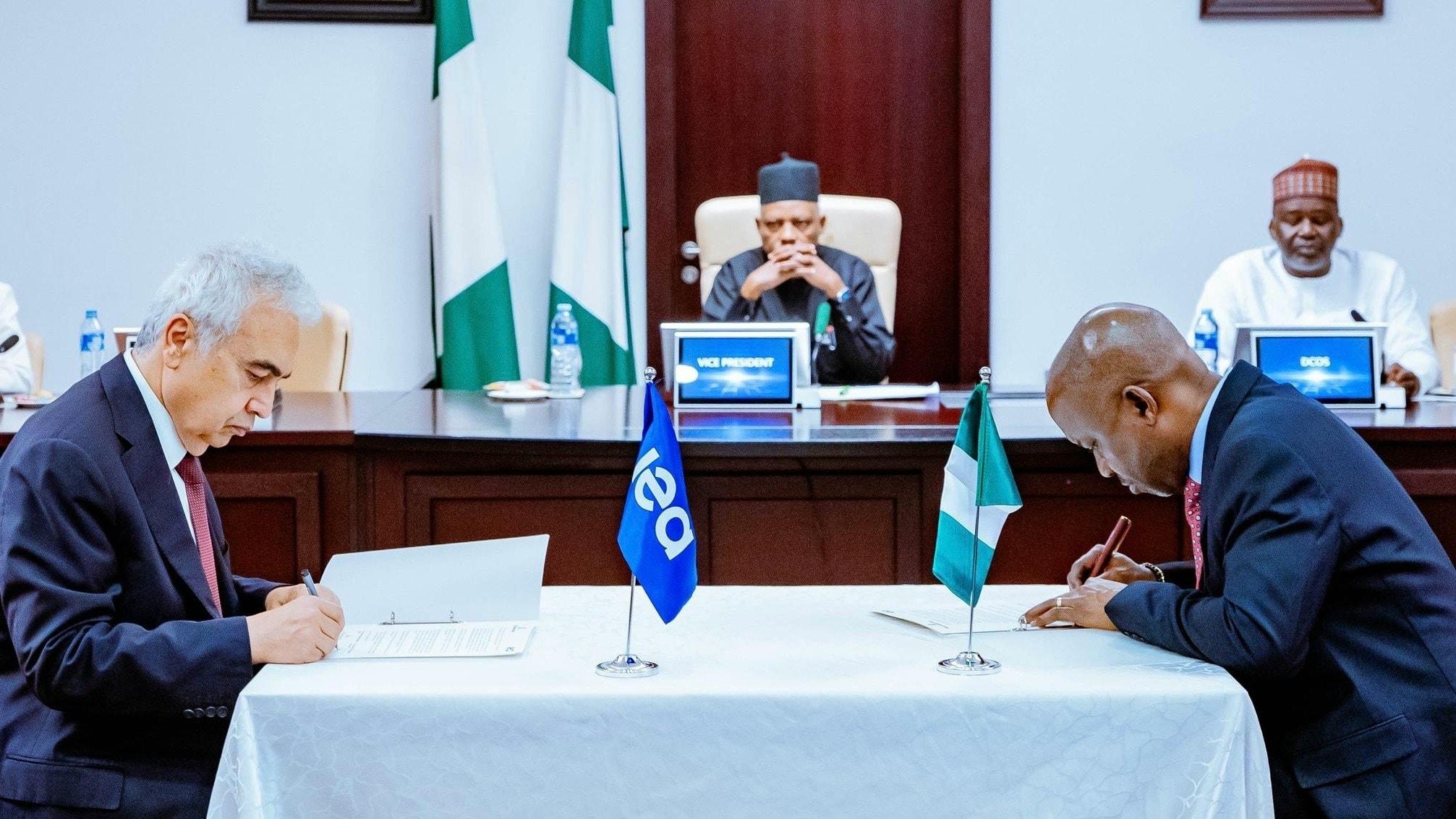
The Federal Government and the International Energy Agency (IEA) have formally signed the inaugural IEA-Nigeria Joint Work Programme at the Presidential Villa in Abuja. The high-level agreement follows Nigeria's historic admission as an Association country to the global energy body, marking a critical step in bridging producer-consumer dialogue and advancing national economic reforms.
The signing ceremony brought together key state figures, including Vice President Kashim Shettima, Minister of State for Petroleum Resources (Gas) Ekperikpe Ekpo, and visiting IEA Executive Director Fatih Birol.
Unlocking Growth and Energy Investment
During the deliberations in Abuja, IEA Executive Director Fatih Birol highlighted Nigeria's immense market potential, noting that structured regulatory reforms and international cooperation could help double energy investments in the country over the next five years.
Vice President Kashim Shettima welcomed the milestone, emphasizing that the partnership validates the administration's ongoing economic trajectory.
Nigeria's admission as an association country with the IEA is a significant milestone for our country and it reflects Nigeria's strategic importance in the global energy landscape and the confidence that IEA has placed in our commitment to constructive international energy cooperation," Shettima stated. "The country will benefit from IEA's institutional knowledge, the intellectual resources, the reach and expertise to support our nation's ambitions in this sector.
Core Focus Areas of the Joint Work Programme
Developed through rigorous consultations with Nigerian ministries, regulatory bodies, and industry stakeholders, the multi-year roadmap is structured around several critical pillars:
Data Development & Transparency: Enhancing energy data collection, reporting systems, and statistical accuracy across oil, gas, and power value chains to boost investor confidence.
Energy Security & Transition: Formulating robust policies addressing clean cooking solutions, renewable energy integration, energy efficiency, and methane emissions reduction.
Capacity Building: Deepening technical exchanges, expert training, and institutional alignment between Nigerian energy agencies and global IEA experts.
With this formal partnership, Nigeria joins a select group of sub-Saharan African nations in the IEA Association framework, significantly expanding the continent's voice in shaping global energy governance and secure transitions.
More from Business
Dangote Refinery Locks In ₦525 Share Price Ahead of Landmark September IPO Launch
4 hours ago
Nigerian Banks Report Strongest Quarter Since the Pandemic Recovery
7 days ago
Executive Turnover Rises as Boards Push for Faster Growth
7 days ago